Murray’s Cave Aged
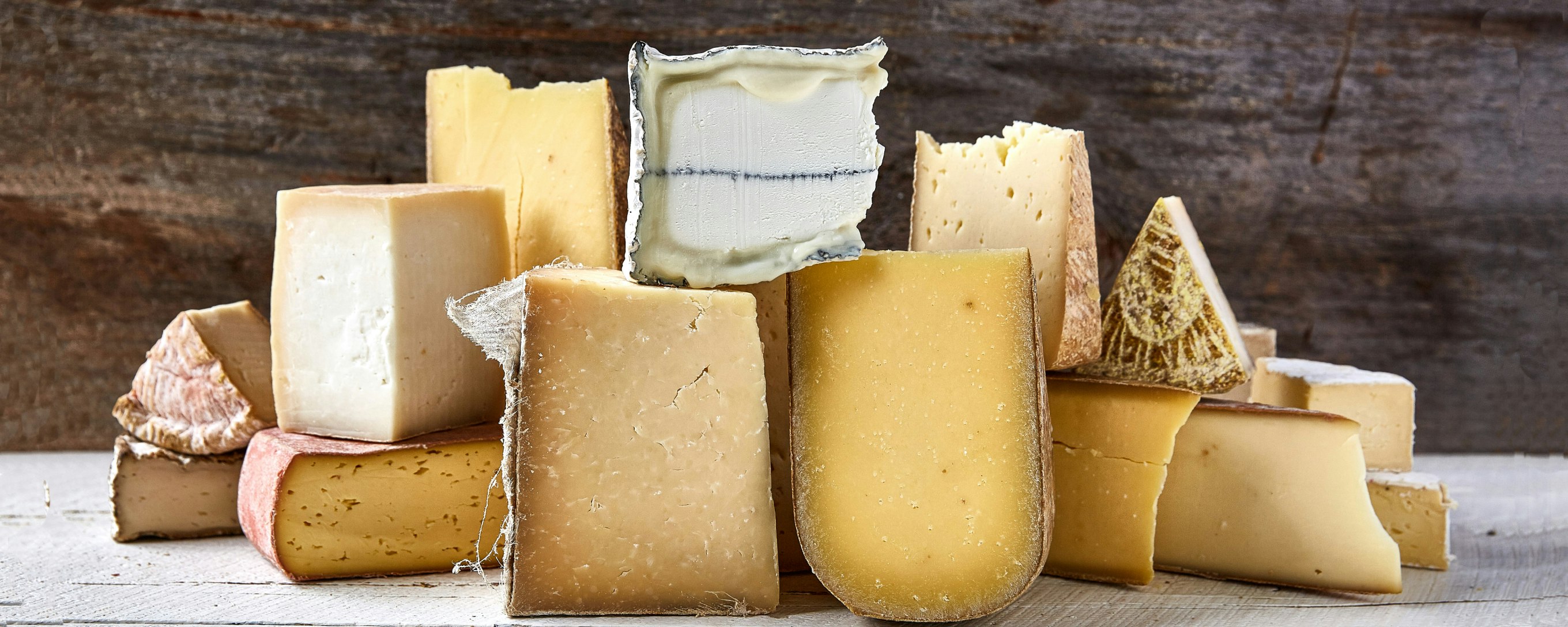
Murray’s Cave Aged: more than 100 cheeses ripened to perfection beneath Bleecker Street. Our cheese caves allow us to mature cheese right here in New York City, so you can enjoy our cheeses when they’re perfectly ripe..
Cheese caves are temperature- and humidity-controlled rooms where each cheese has the right environment to reach its full flavor potential. Common in Europe, particularly in France, this practice known as affinage was relatively unknown to cheese shops until we built caves in 2004. Over the years, we’ve learned a lot about the best methods of cheese aging, both in our own caves and learning from cheesemakers on our travels. Brian Ralph, our Cave Master, oversees our caves with TLC to ensure that you can tell what a difference a cave makes. Take a virtual tour beneath Bleecker Street….
Cave One
The Fridge
Cheese stored in this “cave” doesn’t stay there for long. This refrigerated area contains fresh cheeses that are ready for sale, like fresh chevré. The cold and windy environment is also used to dry out an overly moist cheese to prepare it for aging in another cave. That’s about it!
Cave Two
The Stink Tank
Pungent, stinky, funky, ripe… this cave is all of the above. Which is ironic, because these are the cheeses that get daily baths!
Washed rind cheeses are exactly what they sound like – cheeses whose rinds have been washed with a liquid (typically brine, booze, or some combination of both) to get rid of undesirable mold. Strangely, when you wash away the bad stuff it actually encourages a new (totally okay to eat) bacterial growth: Brevibacterium linens, aka the stuff that gives these cheeses their distinctive orange color and signature stank. Warmer temperatures help the B. linens do their thing, and high humidity keeps the rinds supple & delicate, as opposed to cracked and dry.
The washed rind cave is also home to many of our Cavemaster Reserve cheeses - original creations dreamed up by our mad scientist of an affineur. These cheeses incorporate seasonal ingredients or washes and are limited in availability -- and highly delicious.
Cave Three
The Bloomies
Cave Three is arguably the most exciting of the five, because you can actually see cheese transforming before your eyes! Bloomy rind cheeses are known for their downy white exterior – think of Brie – but few people realize that this rind grows as the cheese ripens.
We purchase our cheese young (aka “naked”) and grow the rinds in our cave. Maturing the cheese in our caves means that we can sell every piece when it’s perfectly ripe and the delicate rinds don’t have to suffer under harsh conditions when being shipped. We keep Cave Three slightly cooler and drier than other caves; if the cave is too warm or moist the molds can grow too quickly and pull away from the paste or become too thick. This environment is ideal for bloomy rind cheeses, particularly our small format goat’s milk cheeses that are produced everywhere from the Loire Valley of France to Longmont, Colorado.
Molds added during the cheesemaking process blossom on the outside of the cheese as it ripens and combine with ambient molds in the cave to create a signature flavor unique to Murray’s – the terroir of Bleecker Street, if you will.
Meet your molds!
Geotrichum candidum is off-white in color and causes a ‘brainy’ appearance, like you see on the rind of Le Chevrot.
Penicillium candidum and P. camemberti are strains of the bloomy white molds seen on cheese like Brie.
Penicillium roquefortii is the blue mold that is used in many blue cheeses. It occasionally appears on Loire Valley chèvres and adds a pleasantly peppery bite.
Mucor mucedo is a menace to satiety! This fungus causes ‘cat fur’ or poofy brown spots to grow on the cheese, kind of like that scary stuff that you find on abandoned leftovers in the fridge. We pluck this off of bloomy rinds, because uncontrolled growth leads to bitter, soapy flavors – yuck!
Cave Four
The Spa
Ahh… this is the place where natural rinds go to relax. People, not so much. There’s a distinct whiff of ammonia in the air that is downright eyeball-stinging, but this is a good thing when it comes to cheese. That unpleasant odor is a by-product of aging, almost like the cheese is exhaling, and when the scent is in the air it means it’s not in the cheese.
Like the washed and bloomy caves, the natural rinds in this cave are actively ripening the cheese from the outside in. If the rinds are mottled and multicolored, this indicates spontaneous growth from a well-seasoned cave (Yep, just like a cast iron skillet). Some cheeses may be brushed to keep mold growth to a minimum, letting internal enzymes work on the cheese instead.
A wide and colorful variety of microorganisms can be found on the rinds in this cave – gray-brown Mucor racemosus, golden yellow Sporotrichum aureum, red-orange Oidium aurautiacum, off-white Geotrichum candidum, and blue-green Penicillium roquefortii.
High humidity keeps the young, developing rinds alive in Cave Four. It is slightly colder so that the cheeses do not ripen too quickly, which may cause bitterness and an ammoniated flavor.
Cave Five
The Big Guns
And in this corner!... the heavyweights of the cheese world… weighing in at anywhere from 30 to 90 pounds… the format is large and the flavor is larger… You get the idea. This cheese is BIG! Cave Five is home to Alpine style cheese, clothbound cheddars, and big rounds of Parmigiano-Reggiano.
This style of cheese is distinct because the rinds are largely there to protect the cheese from moisture loss and inappropriate molds - they are not actively ripening the cheese like in the other aged styles. (Alpine style cheeses have been washed at some point during the ripening process which does directly affect flavor, as does the cloth binding on some cheeses.)
A mild temperature and high humidity can create an eerie mist in Cave Five. You might feel like you’re walking into a cheese wonderland! And actually, you are. We work with cheesemakers to taste batches of cheese and select flavors we want, so every wheel you see will consistently be the best tasting version available.
The temperature in this cave also helps to spur on the enzymatic action deep within the cheese, which continues to develop complex flavors over time. This means, you guessed it, that extra tasty cheese we selected is getting tastier every second.
CONSTRUCTION OF THE CAVES
All of our caves were designed to include as many natural materials as possible in an effort to replicate a 'real' cave as it would have been long ago.
Porous cement helps with humidity retention. The walls are treated with a mineral wash containing calcium and salt, which growths cling to, causing each cave’s micro-biotic environment to flourish. The vaulted shape of the ceilings ensures proper air flow and prevents condensation.
Shop Cave Aged Cheeses

LearnMore
Click here for upcoming classes and tours of our caves, including our popular Mystery of the Caves class.
READ coverage about our caves in The New York Times.
WATCH Cheese Aging in our Caves